top of page
Image by Clay Banks

Our mathematics practice system is designed for measurable progress.

Our worksheets help students build a strong mathematical foundation. After mastering a concept, they move confidently to the next challenge.

With a strong foundation, students can tackle exam questions with confidence. They can focus on sharpening their problem-solving skills and building the confidence to succeed in exams.

Just 30 minutes of focused daily practice helps students make steady progress, build lasting confidence, and develop a strong work ethic.
Worksheets

Master a new concept every week with 15 minutes of daily worksheet practice.

Lower Primary

Ages 5-9

These worksheets build essential early maths skills through clear, structured practice with basic number operations. They help young learners develop confidence, accuracy, and fluency before moving on to more challenging primary content.
Upper Primary

Ages 9-12

These worksheets strengthen core arithmetic, fractions, decimals, percentages, and early algebra skills. They focus on fluency and precision so students can approach secondary-level maths with a strong, reliable foundation.
Lower Secondary

Ages 12-14

These worksheets reinforce key algebra, geometry, and number skills taught in the early secondary years. They help students master essential techniques so they can tackle higher-level topics without struggling with the basics.
Upper Secondary

Ages 14-16

These worksheets consolidate advanced algebra, trigonometry, functions, and exam-focused skills. They provide the targeted practice students need to improve speed, accuracy, and readiness for high-stakes exams.
Pre-University

Ages 16-18

These worksheets introduce and refine core pure mathematics techniques such as logarithms, series, binomial expansion, and advanced algebra. They ensure students have strong fundamental skills so they can transition smoothly into university-level mathematics.

Exam Questions

Develop exam confidence and improved problem-solving skills with 15 minutes of daily exam practice.

Key Stage 1

Ages 5-7

Key Stage 1 is part of the national curriculum in England and is also followed by international schools using the British system. Aimed at children aged 5 to 7, it focuses on developing early skills in number, calculation, shapes, and measurement.
Key Stage 2

Ages 7-11

Key Stage 2 is part of the national curriculum in England and is also followed by international schools using the British system. Aimed at children aged 7 to 11, it builds on earlier learning and develops skills in arithmetic, problem-solving, fractions, geometry, and data handling.
IGCSE Foundation Tier

Ages 11-14

IGCSE Foundation Tier is the easier level of the IGCSE exam followed by international schools using the British system. Though aimed at students aged 14 to 16, it provides an ideal pathway for younger learners aged 11 to 14.
IGCSE Higher Tier

Ages 14-16

IGCSE Higher Tier is the more challenging level of the IGCSE exam followed by international schools using the British system. Aimed at students aged 14 to 16, it is ideal for learners ready to tackle more complex mathematical skills and concepts.
IGCSE Further Pure

Ages 15-16

IGCSE Further Pure is the most advanced level of the IGCSE exam offered by international schools using the British system. Intended for high-achieving students aged 14 to 16, it introduces advanced topics and prepares learners for further study in mathematics and related fields.

[1 mark]

Medium

Q17.png

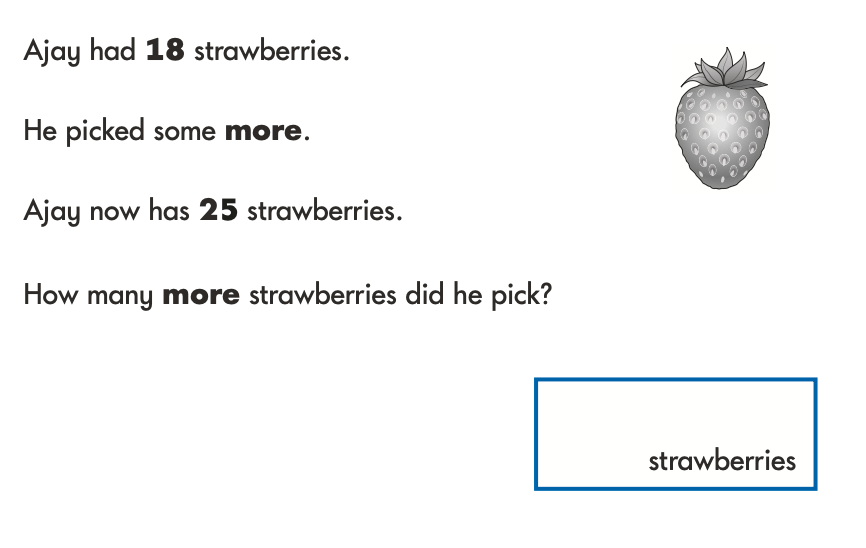
Sample questions:

bottom of page